How Far Will Your AI‑Written CV Get You?
Every time you hit “submit,” you have to ask yourself — who am I really trying to please here? The recruiter reading my words, or the system scoring them?
The blurred line between authenticity and automation
I’ve been looking for a position for several years now, and apart from taking its toll financially, mentally, and emotionally, it’s also been deeply frustrating.
In essence, the job hunt feels like this:
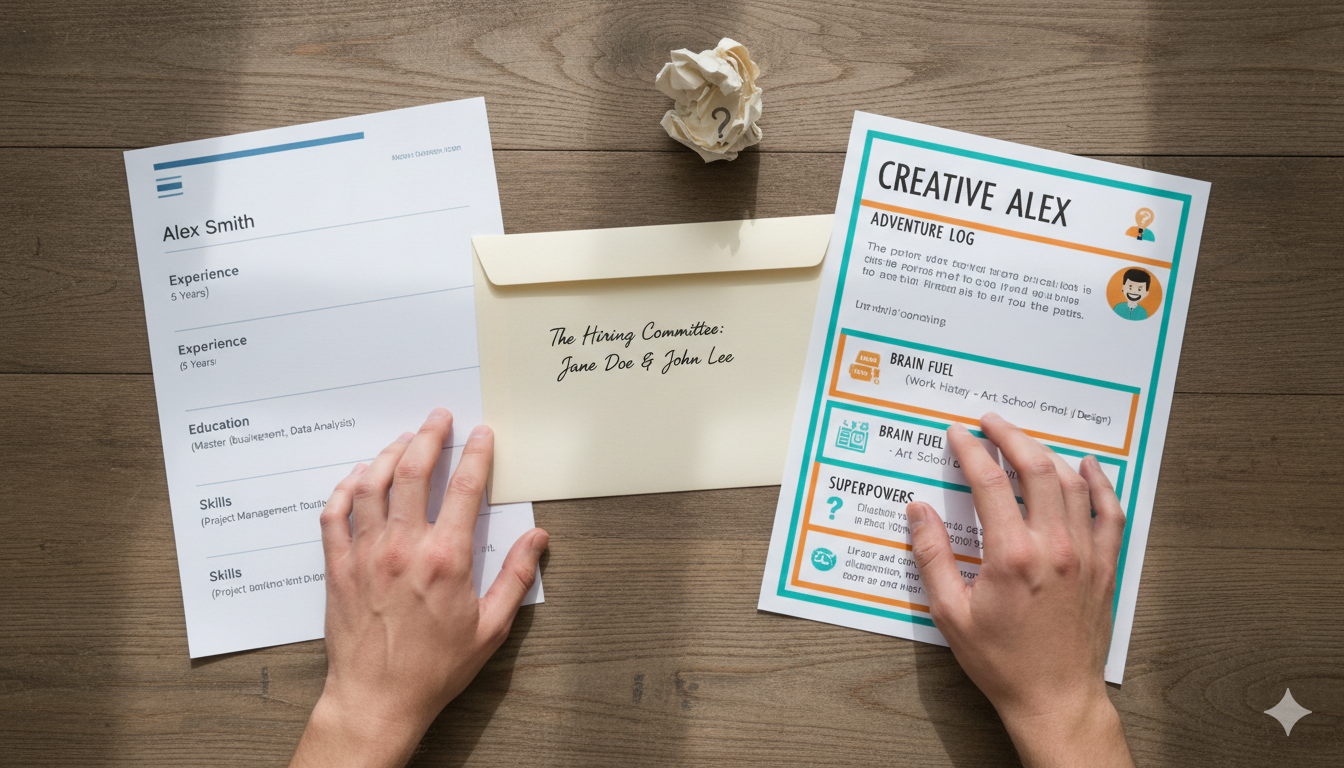
- You have to create an advert about yourself – not too self‑promotional, but not hidden in the background either. Someone who can be trusted, takes initiative, shows attention to detail, has the right experience, and can put in the hours.
- You’re sending that advert to a company that has also written one — their job description — full of generic requirements, with a few marked as essential.
- And all the while, you’re hoping your advert reaches the right person rather than being filtered out by some automated rejection stage.
That last part is where much of the time (and frustration) goes.
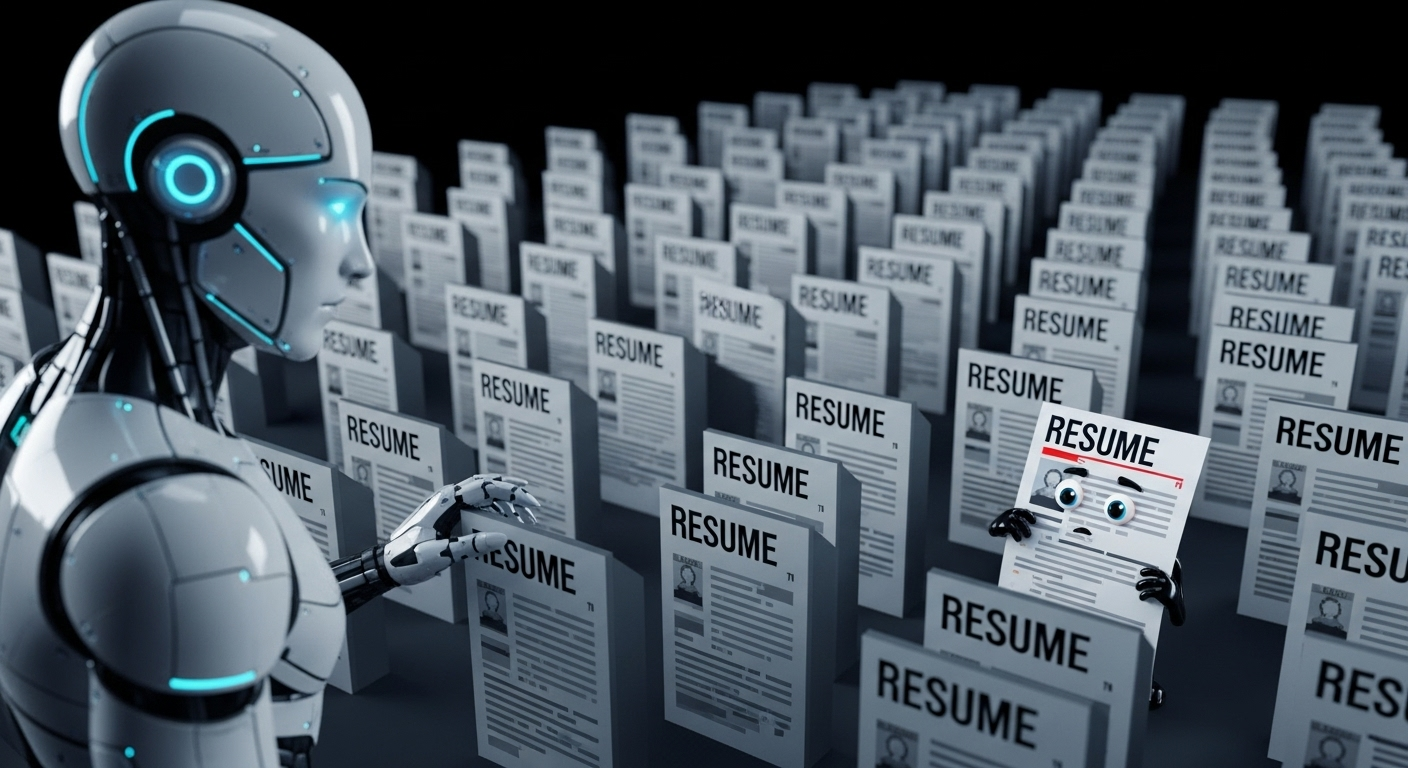
With Application Tracking Systems (ATS) managing the first cull, we start believing we have to “beat the system.”
So we analyse the job advert, pulling out keywords and key phrases. We feed them into our CV, carefully weaving them into place in the hope it scores just high enough to survive the ATS gatekeeper.
To make our advert pitch‑perfect, it’s tempting to let AI write it for us — those essential words and phrases artfully threaded into polished prose, our skills and achievements presented with the flair of a professional speechwriter.
Then we hit “Submit Application,” hoping we’ve fooled the faceless pattern‑matching machine.
(I’ll spare you the many issues with the actual application process — plenty of others have covered them, yet they persist.)
But what happens next?
When AI Writes You Out of the Job
I spoke to a recruiter recently and mentioned how much I dislike the idea of letting Generative AI compose my whole CV. It just doesn’t sound like me. Anyone who’s seen my presentations knows I write simply and clearly — no unnecessary flurries of words. So why would I present myself as someone I’m not?
Sure, I could feed all my writing into an AI model and have it learn my style — but that would mean sharing work I’ve been trusted with, into systems whose code I haven’t written or audited.
So instead, I use AI sparingly — to rephrase sentences, refine tone, or polish phrasing — but never to tell my story for me. It still needs to sound like me.
The recruiter nodded and said that when a CV lands on their desk that seems AI‑written, it often goes straight into the rejection pile.
All that time and effort spent getting your “advert” past the ATS and onto a recruiter’s desk — wasted. The irony is that in trying to sound better than human, you’ve made the job harder for the human reading it.
Beating the Bots vs. Being Yourself
It seems ATS systems have evolved too. They don’t just look for keyword matches anymore — they now assess tone, structure, and even authenticity. If your CV reads too much like the advert itself, or comes across as unnaturally smooth, you might get filtered out for trying too hard.
As for me, I’ll keep doing it my way. When a recruiter reaches out, it’ll be because of something I actually wrote. My words made them notice. And as the process continues, I can stand confidently by everything in my CV — because it’s mine.